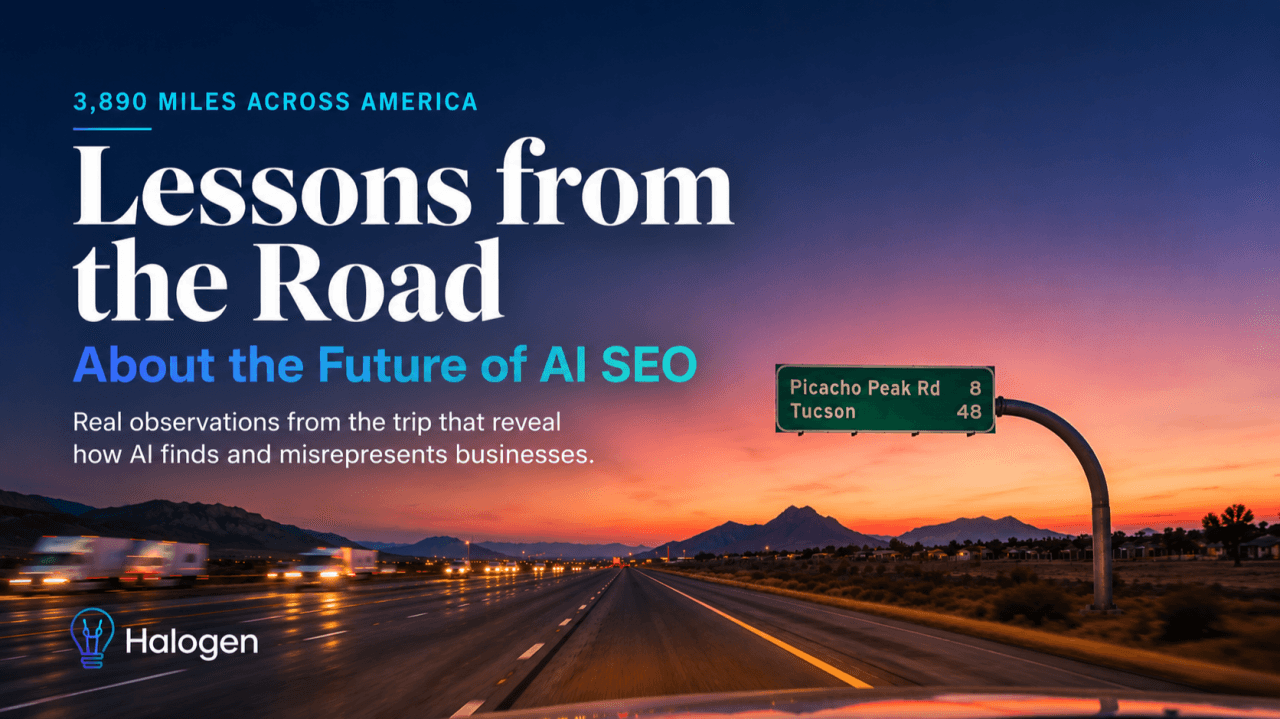
I Drove 3,890 Miles Across America for Its 250th Birthday. Here's What I Learned About the Future of AI SEO
My family and I spent two and a half weeks driving 3,890 miles across the country to celebrate America turning 250. At every stop, I asked ChatGPT what it knew about the local businesses. The pattern I saw on the road is the same one changing how your next customer finds you right now.

Photo by Mario V. Adoc. Interstate 10 outside Tucson, Arizona, at dusk.
I'm Mario V. Adoc, co-founder and CEO of Halogen.
My family and I just spent two and a half weeks driving 3,890 miles across the country to celebrate America turning 250. We ate in border towns and beach cities. We stopped at water parks, roadside stands, and hole in the wall diners that show up on no "best of" list anywhere.
I run a company that measures how AI describes businesses. So I could not turn it off. At every stop, I asked ChatGPT what it knew. The pattern I saw on the road is the same one changing how your next customer finds you right now.
Here is what stood out.
Showing up in ChatGPT is not the same as being optimized
In Quartzsite, Arizona, we found a family jerky shop just off the interstate. The kind of place locals swear by and travelers only find by accident.
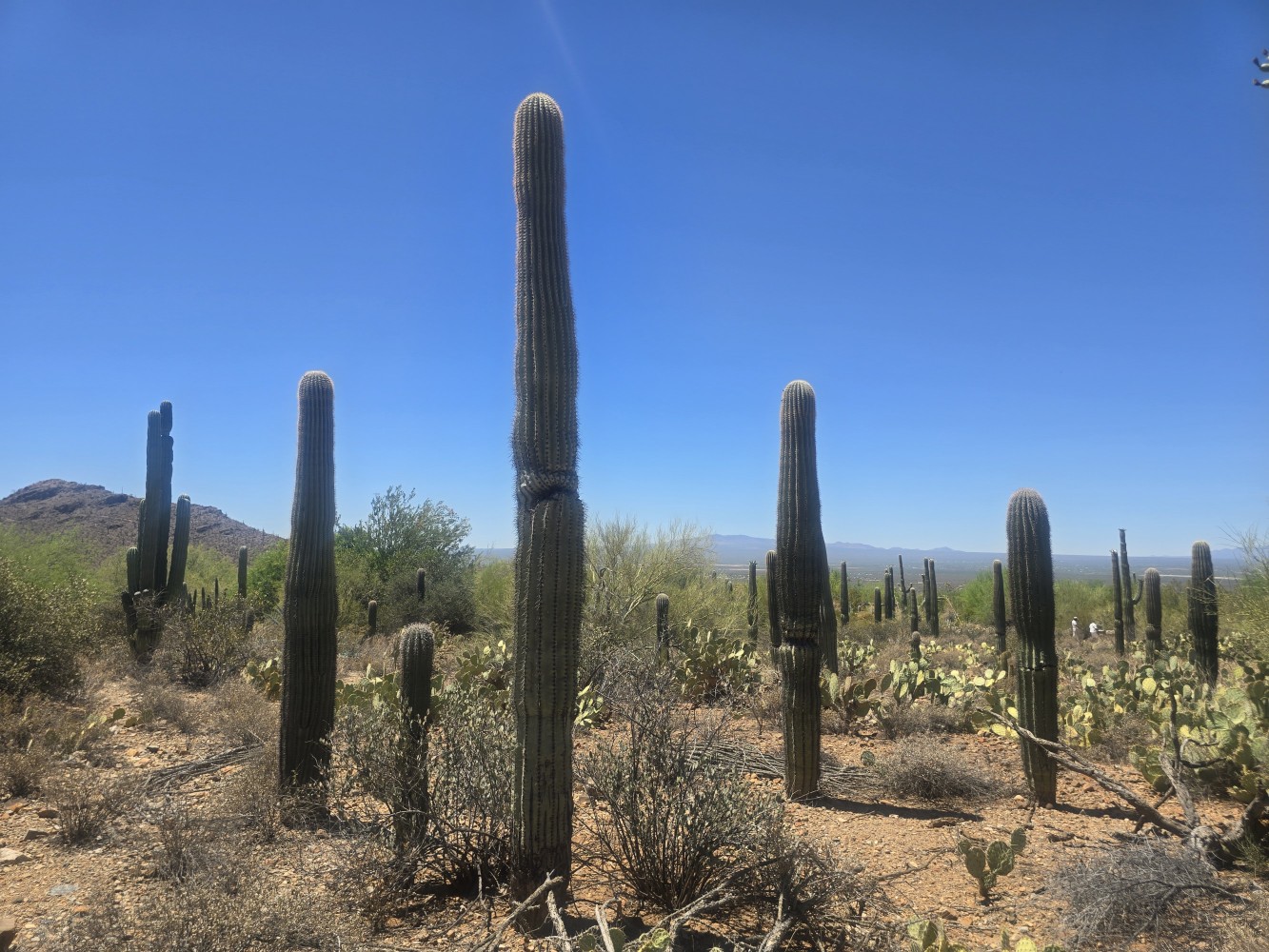
The Arizona desert. Out here, the best small shops are famous with locals and invisible to everyone else.
I asked ChatGPT for the best jerky in Quartzsite. It named them. I asked for the best jerky in Arizona. It named them again. Impressive for a small shop with a dated website.
Then I ran them through our AI Visibility Check. They scored a zero.
That sounds like a contradiction. It is not. Being mentioned means the model has heard of you. Being optimized means the model recommends you, describes you accurately, and surfaces you for the queries that actually convert.
The query that matters here is not "best jerky in Quartzsite." It is "where can I find high quality jerky that tastes homemade." That is a buyer with real intent and no brand in mind. Right now, that buyer gets pointed to a competitor.
The gap between "known" and "recommended" is where most good businesses are losing without ever seeing it.
Is a great Google Business Profile enough for AI search?
Down in Galveston, we ate at Taqueria El Jardin Tropical. 4.9 stars. More than a thousand reviews. A Google Business Profile most owners would envy. ChatGPT knew them, and for good reason.
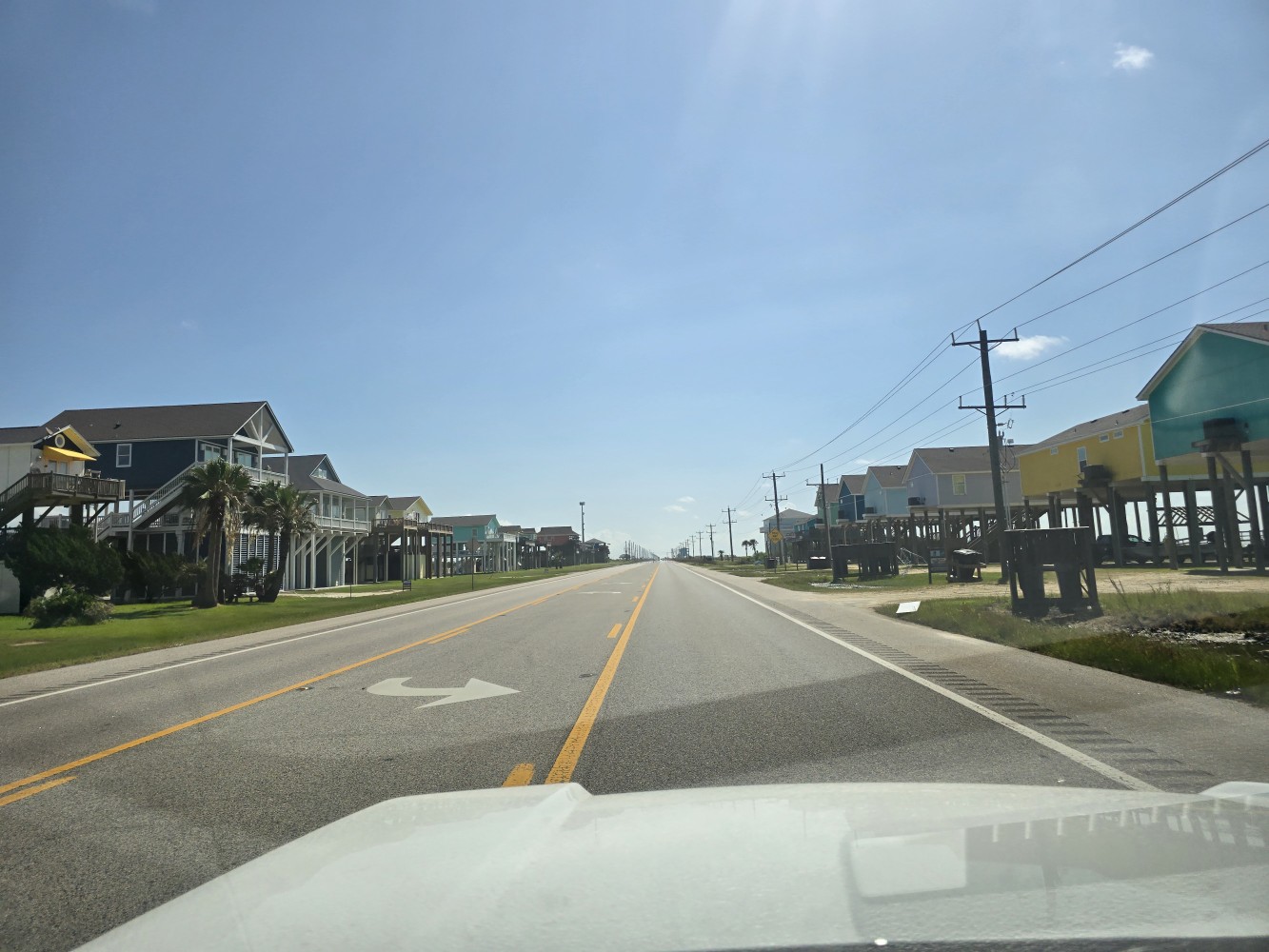
Galveston, Texas. Great reviews win the map here. They are not the whole story for AI.
That profile is why they win Google Maps. It is not why they win AI.
AI does not read your Google Business Profile and stop there. It cross references your website, directories, review sites, local news, and community threads, then recommends only the 3 to 5 businesses it can corroborate. Reddit alone accounts for roughly 40.1% of the sources large language models cite.
A Google Business Profile is one signal, on one platform, that you own. AI visibility is the same facts about you showing up consistently across many platforms you do not own.
It also reads reviews as words, not just stars. A review that names the dish and the neighborhood teaches AI far more than a silent five star tap.
Taqueria El Jardin Tropical earned their local authority the right way. Their next chapter is making sure the rest of the web agrees, because that is the web AI is actually reading.
Why does AI invent business details?
At several stops, small diners, a water park, a roadside attraction, the details AI gave us were simply wrong. Wrong hours. Wrong status. One place it described as closed was open and busy when we pulled in.
There were stops we would have skipped entirely if we had not opened the business's own website to check for ourselves.
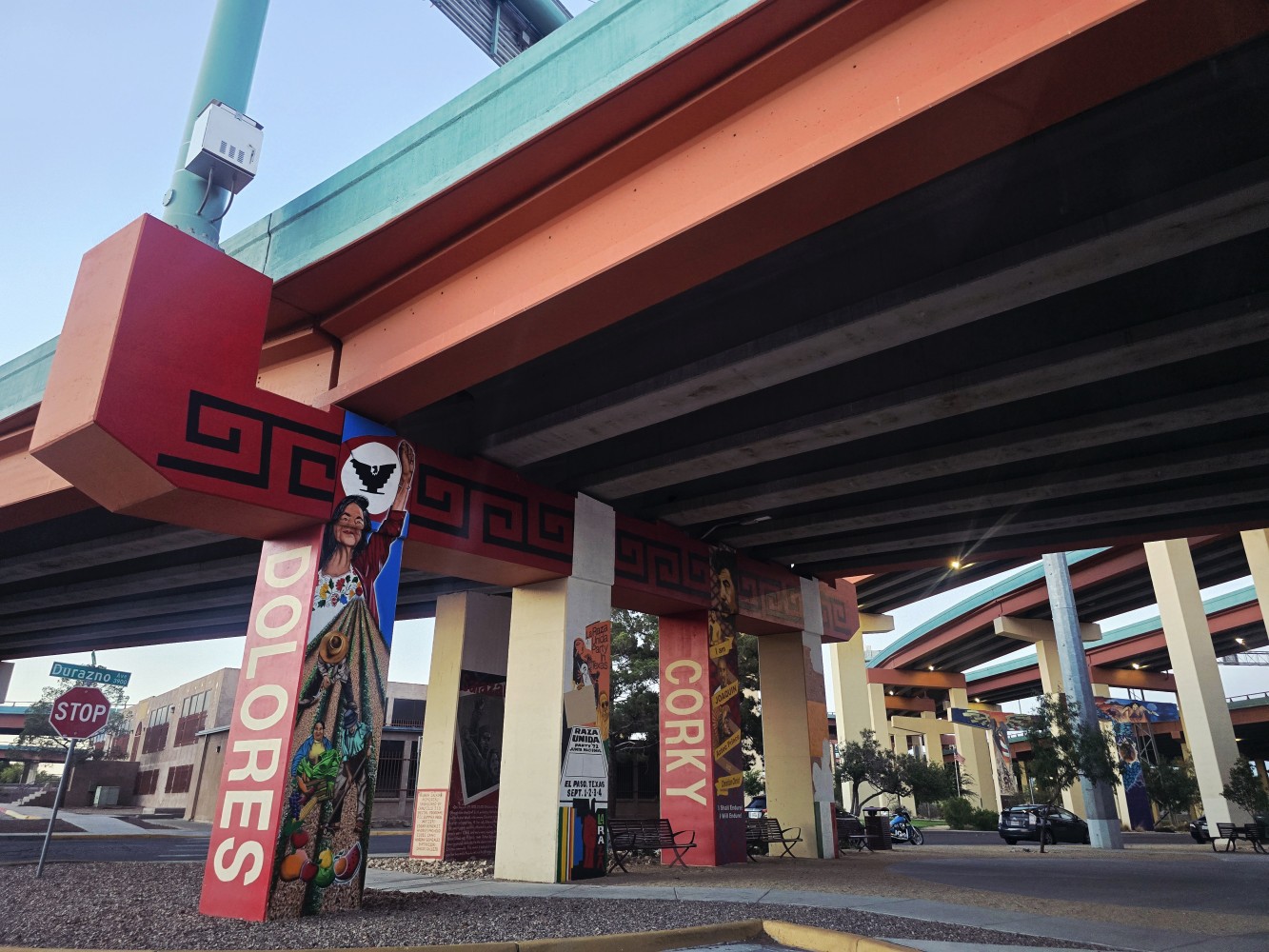
Lincoln Park in El Paso. One of the stops AI nearly talked us out of.
A confident, wrong answer does not just annoy a customer. It sends them somewhere else. You never see the visit you lost. There is no bounce rate for a customer who never arrives.
This is not a rare edge case. In an April 2026 study, NP Digital found ChatGPT was the most accurate major model and still returned fully correct answers only about 60% of the time, with the most errors on niche and real time questions. Local hours, seasonal status, and small business facts are exactly that kind of question.
AI fills gaps with guesses. And it often guesses because your information is fragmented across the web. When your name, address, and hours disagree from one site to the next, AI cannot confidently decide who you are, so it invents an answer. The fix is not hoping it guesses right. It is feeding it facts it cannot misread.
What every business should do about AI visibility
The macro numbers are hard to ignore. ChatGPT now serves more than 900 million weekly users (OpenAI, February 2026). 47% of consumers have already used AI to make a purchase decision (Eight Oh Two, 2026). And AI search converts at 14.2% versus 2.8% for traditional Google search (Exposure Ninja).
Here is where to start.
- Check what AI says about you today. You cannot fix a description you have never read.
- Make your own website machine readable. Add structured data for your hours, location, and reviews so AI has a source it trusts.
- Align your name, address, and phone number everywhere. Inconsistent details are what teach AI to hallucinate.
- Earn mentions off your own site. Reviews, directories, press, and honest community threads are the corroboration AI looks for.
- Optimize for intent, not just your name. Win the "where can I find" questions, not only the ones that already include your brand.
Nine in ten brands have no AI visibility strategy or have only just begun (Cordial via eMarketer, 2025). That is not a warning. That is an open road.
The takeaway from 3,890 miles
The USA at 250 is full of businesses that earned their reputation the hard way, one customer at a time.
The next stretch will reward the ones whose reputation the machines can read. The jerky shop is already known. The taqueria already has the reviews. What both need now is to be described, accurately and consistently, in the exact place their next customer is asking.
That place is no longer a map. It is a model.
Curious what AI says about your business right now? I left a free AI Visibility Check in the comments of the original post.